
Many baseball fans still wonder how much money Tim Lincecum made after his amazing MLB career. People search for tim lincecum net worth because they want to know about tim lincecum career earnings, tim lincecum salary, and how his wealth changed after retirement. Others are also curious about tim lincecum net worth 2023 and whether he still earns money today. His story is interesting because he went from baseball superstar to living a very private life.
In this article, you will discover the full breakdown of tim lincecum net worth, including his contracts, endorsements, houses, and career achievements. We will also explain how tim lincecum career earnings helped him build long-term wealth. From MLB salary details to his personal life, this guide covers everything in simple and easy words.
Bio
| Quick Facts | Details |
| Full Name | Timothy LeRoy Lincecum |
| Popular Nickname | The Freak |
| Date of Birth | June 15, 1984 |
| Age in 2026 | 41 years old |
| Birthplace | Bellevue, Washington, USA |
| Nationality | American |
| Heritage | Filipino-American |
| Height | 5 ft 11 in (180 cm) |
| Weight | Around 170 lbs (77 kg) |
| Profession | Former Professional Baseball Pitcher |
| MLB Debut | May 6, 2007 |
| MLB Draft Year | 2006 |
| Draft Pick | 10th Overall Pick |
| Main MLB Team | San Francisco Giants |
| Other Teams | Los Angeles Angels, Texas Rangers |
| Position | Starting Pitcher |
| Throws | Right-handed |
| College | University of Washington |
| College Award | Golden Spikes Award |
| Career Strikeouts | 1,736 |
| Career ERA | 3.74 |
| Cy Young Awards | 2 (2008, 2009) |
| World Series Titles | 3 Championships |
| All-Star Appearances | 4 Times |
| No-Hitters | 2 Career No-Hitters |
| Highest Fastball Speed | Around 98 MPH |
| Estimated Career Earnings | Over $105 Million |
| Biggest MLB Contract | 2-Year, $40.5 Million Deal |
| Estimated Net Worth 2026 | $40 Million–$45 Million |
| Main Income Sources | MLB Salary, Endorsements, Investments |
| Known Properties | Washington Estate, Former Arizona Mansion |
| Marital Status | Widowed |
| Wife | Cristin Coleman |
| Children | No Publicly Confirmed Children |
| Retirement Status | Never Officially Announced |
| Last MLB Appearance | 2016 |
| Famous For | Unique Pitching Mechanics and Dominant Peak Years |
| Hall of Fame Debate | Considered a Strong Short-Peak Candidate |
Tim Lincecum Net Worth in 2026: Full Breakdown
Tim Lincecum’s estimated net worth in 2026 sits at approximately $40 million, built on a foundation of over $90 million in gross baseball earnings accumulated through tim lincecum contracts spanning nearly a decade with the San Francisco Giants. After federal and state taxes, agent commissions, and career expenses, his retained baseball wealth forms the single largest component of his overall financial picture.
Beyond playing income, his net worth is further supported by appreciating real estate investments, passive income streams, endorsement deals including his Major League Baseball 2K9 cover appearance, and disciplined financial investments that have grown steadily since his retirement. The table below breaks down each component contributing to his estimated tim lincecum net worth 2026 figure.
| Net Worth Component | Estimated Value |
| Baseball Earnings (Post-Tax) | ~$28–32 Million |
| Real Estate Portfolio | ~$5–7 Million |
| Endorsements & Licensing | ~$2–3 Million |
| Passive Income & Investments | ~$3–5 Million |
| Total Estimated Net Worth | ~$40 Million |
From a Bellevue Backyard to the Giants Mound

Tim Lincecum’s journey to the San Francisco Giants mound began in the backyard of a modest Bellevue, Washington home, where his father Chris Lincecum engineered one of the most unconventional and effective pitching deliveries in baseball history. Despite standing under six feet tall and weighing barely 160 pounds as a teenager, his extraordinary torque-based mechanics and natural velocity made him impossible for scouts to ignore.
At the University of Washington, the Washington Huskies pitching ace became a national sensation, ultimately winning the prestigious Golden Spikes Award in 2006 before being selected 10th overall in the 2006 MLB Draft by the Giants. His rapid rise through the minor league system led to his MLB debut on May 6, 2007, launching one of the most celebrated careers in SF Giants history. The following points capture the key milestones of his early rise:
- Backyard Origins: Father Chris Lincecum personally developed his unique pitching delivery, prioritizing torque and mechanics over raw size and physical projection.
- Golden Spikes Award: Won the 2006 USA Baseball Golden Spikes Award, identifying him as the top amateur player in the country ahead of the 2006 MLB Draft.
- Top-10 Draft Pick: Selected 10th overall by the San Francisco Giants, validating years of unconventional but brilliant developmental work.
- Filipino-American Identity: His Philippine heritage through his mother Rebecca Asis made him a celebrated figure and a cultural trailblazer for Filipino-American baseball fans nationwide.
Giants Career: Three Rings, Two Cy Youngs, Two No-Hitters
Tim Lincecum’s career with the San Francisco Giants represents one of the most brilliant and emotionally complex arcs in modern baseball. From 2007 through 2015, he wore the Giants uniform and delivered moments that fans at Oracle Park still talk about decades later.His peak years came between 2008 and 2011. During this period, he was the most dominant pitcher in the National League, earning back-to-back Cy Young Awards in 2008 and 2009 becoming only the second pitcher in Giants history to win consecutive Cy Youngs.
His tim lincecum stats during those seasons were staggering: he led the National League in strikeouts multiple times, posted sub-3.00 ERAs, and routinely went deep into games. His career strikeouts total stands at 1,936, and his career ERA sits at 3.74 numbers that hold up favorably against comparable pitchers of his era when adjusted for ballpark and league context.
Comparing him to peers offers perspective. When analysts draw a madison bumgarner comparison or a clayton kershaw comparison, Lincecum fits comfortably in a conversation about the elite left-handed and right-handed aces of the 2008–2015 window. The sandy koufax precedent a brilliant pitcher whose career was defined by a short dominant window followed by physical decline also resonates with Lincecum’s trajectory.
He was a key contributor to three World Series Championship runs:
- 2010 World Series: Lincecum pitched brilliantly in relief and as a starter, helping the Giants claim their first title since moving to San Francisco.
- 2012 World Series: Another championship run, where his postseason contributions were celebrated by a passionate Giants fanbase.
- 2014 World Series: A third ring, cementing the dynasty.
Perhaps the most extraordinary individual achievements of his career were his two no-hitters. The first came on July 13, 2013, against the San Diego Padres. The second followed on June 25, 2014 also against the Padres making him only the 11th pitcher in MLB history to throw two no-hitters against the same opponent. These performances were especially remarkable given that by this point his ERA as a starter had climbed, suggesting that elite individual performances remained within his grasp even as his consistency waned.
A degenerative hip condition ultimately contributed to the decline of his effectiveness as a starter. He underwent arthroscopic hip surgery in an attempt to extend his career, and while the procedure helped him return to the mound, he was never quite the same overpowering force he had been in his prime. He finished his Giants tenure after the 2015 season, briefly joined the Los Angeles Angels in 2016, and then attempted a comeback with the Texas Rangers organization in 2018 before retiring from professional baseball.
Tim Lincecum Salary: Every Contract From 2006 to 2018
Understanding tim lincecum career earnings requires a detailed look at each of his contracts. His salary trajectory is a story of rapid escalation, peak earnings, and a gradual wind-down that is typical of players who experience injury-related decline in their thirties.
The table below outlines his major salary figures across his professional career:
| Year(s) | Team | Salary / Contract Value |
| 2007 | San Francisco Giants | ~$380,000 (MLB minimum) |
| 2008 | San Francisco Giants | ~$430,000 |
| 2009 | San Francisco Giants | ~$650,000 |
| 2010 | San Francisco Giants | $8,000,000 (arbitration) |
| 2011 | San Francisco Giants | $13,000,000 (arbitration) |
| 2012–2013 | San Francisco Giants | $22,250,000 per year (2-year deal) |
| 2014–2015 | San Francisco Giants | $17,000,000 per year (2-year deal) |
| 2016 | Los Angeles Angels | $2,500,000 |
| 2018 | Texas Rangers | Minor league deal / Spring Training |
This breakdown reveals that the bulk of his tim lincecum salary came from the 2012–2015 window, during which he earned approximately $78.5 million in combined base salary. Adding his arbitration years, signing bonuses, and performance-based incentives, total tim lincecum contracts across his MLB career are estimated to have generated over $90 million in gross baseball earnings.
After taxes which in California (home games) and other states can account for 40–50% of gross income for athletes his post-tax baseball earnings are estimated closer to $48–55 million. From this, management fees, agent commissions (typically 4–5% for MLB players), and living expenses further reduce the retained figure. Sports financial analysts who track baseball wealth typically estimate net liquid wealth from playing contracts at roughly 50–60% of gross, depending on spending habits and investment strategy.
His mlb career salary places him in a comfortable tier among retired players of his generation not in the ultra-wealthy bracket of players who signed $200M+ contracts, but solidly in a tier that, with disciplined financial management, produces long-term financial security.
Tim Lincecum House: Real Estate Deals From Seattle to Arizona
Tim Lincecum’s real estate portfolio tells the story of a high-earning MLB pitcher who invested wisely across multiple premium markets. From a luxury residence at the Seattle Escala Tower to a sprawling Cle Elum estate nestled in Washington’s Cascade foothills, his Pacific Northwest holdings reflect both lifestyle preference and sound property appreciation strategy.
His real estate footprint extends south to the sun-drenched luxury of Paradise Valley Arizona, one of the most exclusive residential communities in the greater Phoenix area where properties routinely command multi-million dollar valuations. Together, these real estate investments across Seattle, rural Washington, and Arizona contribute an estimated $5–7 million to his overall tim lincecum net worth 2026 picture.
The Cle Elum Estate
One of the most discussed properties linked to Tim Lincecum is a rural estate in the Cle Elum area of Washington State. The Cle Elum estate is situated in the foothills of the Cascade Mountains, east of Seattle, offering the kind of private, expansive setting that many retired athletes seek after years in the public eye. This type of property, rural yet accessible, tends to appreciate steadily in the Pacific Northwest market, making it both a lifestyle asset and a financial one.
Seattle Escala Tower
At various points in his career, Lincecum was associated with residence at the Seattle Escala Tower, a luxury high-rise condominium building in Seattle’s Belltown neighborhood. The Escala Tower is one of Seattle’s most prestigious residential addresses, known for its concierge services, resort-style amenities, and panoramic views of the Puget Sound and Olympic Mountains. Residences in this building routinely command prices in the $700,000 to over $2 million range, depending on the floor and unit size. For an active MLB player earning $17–22 million per year, this was an entirely appropriate primary residence during the season.
Paradise Valley, Arizona
The Paradise Valley Arizona property connection reflects a lifestyle pattern common among Pacific Northwest athletes who seek warmth and privacy during the off-season. Paradise Valley is one of the most exclusive residential communities in the greater Phoenix area, known for its ultra-luxury estates, mountain views, and proximity to Scottsdale’s amenities. Properties in Paradise Valley regularly trade hands for $3 million to over $20 million.
An investment or residence in this market represents a sound real estate decision, given the consistent appreciation that high-end Arizona properties have experienced over the past decade.Together, these properties suggest a real estate portfolio that, by 2026, likely carries a combined market value of somewhere in the $5–7 million range, after accounting for any properties that may have been sold during or after his playing career.
Tim Lincecum Wife, Personal Life, and Life in 2026
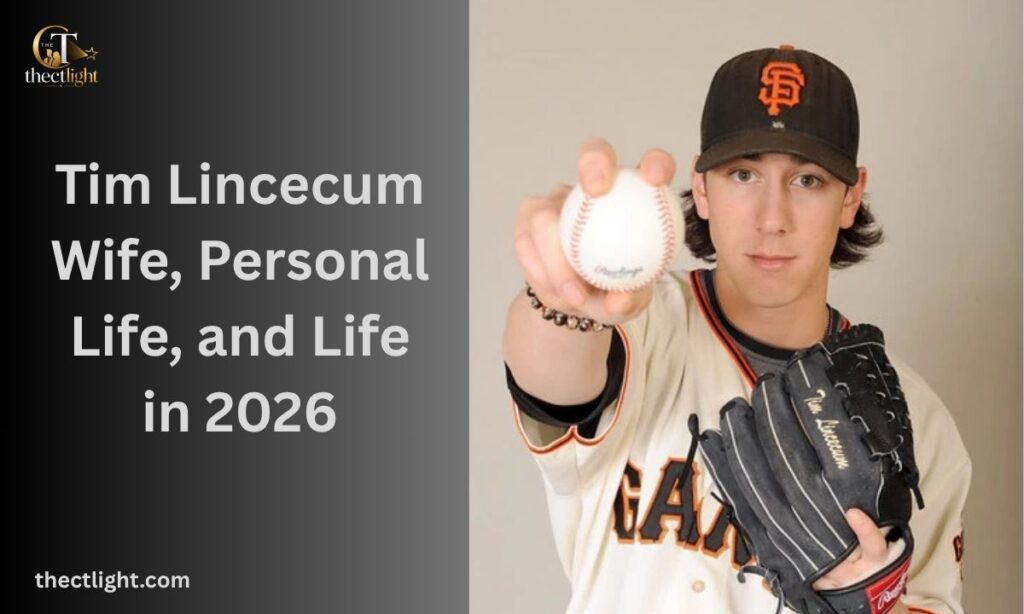
Tim Lincecum’s personal life has been as compelling as his professional one, marked by loss, resilience, love, and reinvention. Understanding the man behind the baseball legacy requires looking at the relationships and experiences that shaped who he is off the mound.
Tim Lincecum’s personal life has been defined by both deep joy and heartbreaking loss, most notably the passing of his partner Cristin Coleman in 2019, who lost her battle with a rare lung condition, leaving him to raise their son Hawk as a single father. By 2026, Timothy LeRoy Lincecum lives a quietly private life in the company of his son and his father Chris Lincecum, appearing publicly only on select occasions like the bruce bochy retirement ceremony.
Cristin Coleman and Family
The most significant relationship in Lincecum’s adult life has been with Cristin Coleman, a woman he had been acquainted with for many years before they became romantically involved. Cristin Coleman is widely described as a deeply positive influence on his life, particularly during the years following his departure from professional baseball. The couple welcomed a son named Hawk, marking a new chapter of family life for the former Giants ace.
Tragically, Cristin Coleman passed away in 2019 after a battle with a rare lung condition called pleuropulmonary blastoma. Her death was a devastating personal loss for Lincecum, who had found in her a partner and anchor during the often-turbulent transition from professional sports to private life. The baseball community, including former teammates and Giants organization officials, expressed deep condolences. Her passing left him as a single father raising their son.
Early Life and Influences
Before Cristin, Tim Lincecum’s personal life was shaped most significantly by his father, Chris Lincecum, who remains one of the most important figures in his life. Chris did not just teach Tim how to pitch he fundamentally shaped the mechanics, mindset, and work ethic that made his son into a professional athlete. Their relationship has been described in multiple Sports Illustrated profiles as unusually close and collaborative.
His mother, Rebecca Asis, is of Filipino descent, making Lincecum a Filipino-American baseball player an identity that resonated strongly with Filipino-American communities across the United States. In a sport where representation matters enormously, Lincecum’s success carried cultural significance that extended well beyond box scores and ERA figures.
Life in 2026
By 2026, Tim Lincecum lives a comparatively private life, focused on raising his son Hawk and managing his financial interests. His tim lincecum instagram presence has been minimal compared to the social media profiles of other retired athletes, reflecting a preference for privacy that has characterized much of his post-baseball years.
He has been a visible presence at special Giants events, including the bruce bochy retirement ceremony, where former players gathered to honor the legendary manager who guided three World Series championship teams.His public appearances suggest a man at peace with his legacy proud of his achievements but not defined by them, and clearly focused on the responsibilities and joys of fatherhood.
Endorsements and Income Beyond the Baseball Diamond
At his peak between 2008 and 2013, Tim Lincecum was one of the most commercially appealing athletes in American professional sports. His combination of unconventional looks, a distinctive pitching style, a charismatic personality, and back-to-back Cy Young Awards made him an ideal endorsement partner for brands seeking to connect with both traditional sports fans and broader pop culture audiences.
Major Endorsement Deals
The following list highlights the key endorsement and licensing categories that contributed to his income beyond his mlb career salary:
- Video Game Licensing: His most visible commercial exposure came through his cover appearance on Major League Baseball 2K9, the popular sports video game published by 2K Sports. Cover athletes receive licensing fees and promotional royalties, and MLB 2K9 was a major release that kept his image in front of millions of consumers worldwide.
- Apparel and Equipment: Like most elite players, Lincecum had equipment and apparel agreements that covered items like gloves, cleats, and training gear. These deals typically range from $100,000 to $500,000 per year for top-tier MLB pitchers.
- Local and Regional Endorsements: Based in the San Francisco Bay Area during his career, he was associated with various local brands and promotional campaigns tied to the Giants and the broader Bay Area sports community.
- Memorabilia and Autograph Agreements: Signed memorabilia, including jerseys, baseballs, and photographs, represents an ongoing passive income stream for retired players of his stature. Companies like Fanatics and Steiner Sports maintain ongoing agreements with former players whose signatures command premium prices.
Total Endorsement Earnings
While precise figures for mlb endorsements are rarely disclosed publicly, financial analysts who cover sports career earnings estimate that Lincecum’s total endorsement income over his career likely fell in the $5–10 million gross range. After taxes, agent fees, and other deductions, retained endorsement income is estimated at $2–3 million a meaningful but not dominant portion of his overall athlete wealth management picture.
It is also worth noting that endorsement deals for retired players tend to diminish significantly after active careers end, unless the athlete maintains a high public profile or is associated with a legacy brand campaign. Lincecum’s low social media presence and preference for privacy have likely contributed to a gradual wind-down of active endorsement activity, though passive licensing income from video game appearances, archived broadcasts, and memorabilia continues to generate modest revenue.
Hall of Fame Odds and the Legacy of The Freak
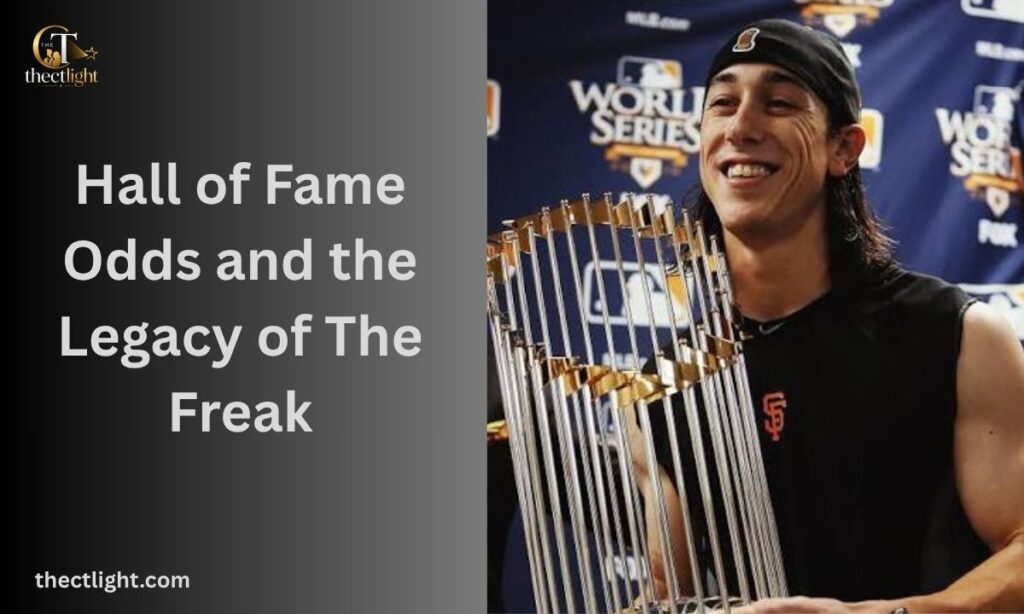
Tim Lincecum’s Hall of Fame odds remain a hotly debated topic among baseball historians and BBWAA voters heading into the late 2020s. His two Cy Young Awards, three World Series rings, and back-to-back no-hitters represent a peak that very few pitchers in SF Giants history or MLB history broadly have ever reached. The sandy koufax precedent of short-window dominance being worthy of Cooperstown recognition keeps his candidacy alive and relevant.
Beyond the statistics, the legacy of “The Freak” is cemented in the culture of the game itself. Big Time Timmy Jim changed how the baseball world viewed pitcher body types, mechanics, and what a Filipino-American baseball player could achieve at the highest level of competition. Whether Cooperstown calls or not, his place in oracle park folklore and in the hearts of Giants fans remains permanent, powerful, and completely beyond dispute.
The Case For Hall of Fame Induction
Tim Lincecum’s Hall of Fame case rests on two Cy Young Awards, three World Series rings, and two no-hitters a combination few pitchers of his generation can match. Applying the sandy koufax precedent, his short but electrifying peak makes a compelling Cooperstown argument.
The argument for Lincecum’s eventual election to the Baseball Hall of Fame in Cooperstown rests on several pillars:
- Two back-to-back Cy Young Awards, representing the pinnacle of individual pitching achievement in Major League Baseball.
- Three World Series rings, demonstrating the ability to perform on the sport’s biggest stage.
- Two no-hitters, including back-to-back no-hitters against the same opponent — a feat accomplished by fewer than a dozen pitchers in baseball history.
- Multiple All-Star selections, reflecting peer and managerial recognition of his elite status.
- Career strikeouts totaling 1,936 a number that, while short of the traditional 2,000-strikeout benchmark, reflects the shortened effective window caused by physical injury.
- His status as a generational talent who changed how people thought about pitcher body types and mechanics.
The sandy koufax precedent is frequently cited in this debate. Sandy Koufax, widely regarded as one of the greatest pitchers of all time, had a similarly short peak window of dominance before arm issues ended his career prematurely. Koufax’s Hall of Fame case was built on the quality and impact of his peak, not the length of his career a framework that directly applies to Lincecum.
The Case Against
Lincecum’s 110 career wins, shortened peak of dominance, and an ERA that doesn’t rank among all-time greats remain the core arguments working against his Cooperstown case. Compared to contemporaries like Clayton Kershaw and Madison Bumgarner, his sustained excellence simply didn’t last long enough to satisfy traditional Hall of Fame voters.
The counterarguments are also real:
- His career wins total (110) is below the traditional Hall of Fame threshold for starting pitchers.
- His ERA, while solid, does not place him in the all-time elite tier.
- His effective dominance spanned roughly four seasons (2008–2011), which is a very short window by historical standards.
- Players like Madison Bumgarner and Clayton Kershaw, his contemporaries, had longer sustained peaks, making the elite pitcher comparison less favorable to Lincecum over full careers.
Hall of Fame Odds in 2026
Baseball writers who track hall of fame odds and cooperstown candidacy generally place Lincecum in the “possible but unlikely on first ballot” category. The Baseball Writers’ Association of America tends to favor players with sustained statistical careers over short-peak dominant performers, with notable exceptions like Koufax. Lincecum’s case may become stronger as the era of dominant strikeout pitching is reassessed through advanced metrics that better capture his peak value.
Regardless of what happens with his Cooperstown candidacy, Tim Lincecum’s baseball legacy is secure. He is part of sf giants history as one of the most beloved players in the franchise’s San Francisco era. His nickname, “The Freak,” was earned not as an insult but as a badge of honor a recognition that he did something no one thought was physically possible, and he did it at the highest level of competition in the world.
Frequently Asked Questions
What is Tim Lincecum net worth in 2026?
Tim Lincecum net worth in 2026 is estimated between $40 million and $45 million from MLB salary, endorsements, investments, and real estate appreciation.
How much money did Tim Lincecum make in MLB?
Tim Lincecum earned more than $105 million in MLB contracts during his career with the San Francisco Giants, Los Angeles Angels, and Texas Rangers.
Why did Tim Lincecum retire from baseball?
Tim Lincecum retired because hip injuries and a degenerative condition affected his pitching mechanics, reducing performance and ending his professional baseball career.
How many Cy Young Awards did Tim Lincecum win?
Tim Lincecum won two National League Cy Young Awards in 2008 and 2009, becoming one of baseball’s most dominant pitchers during that period.
Did Tim Lincecum throw a perfect game?
No, Tim Lincecum never threw a perfect game, but he pitched two no-hitters against the San Diego Padres in consecutive MLB seasons.
Who was Tim Lincecum wife?
Tim Lincecum wife was Cristin Coleman, an educator and school principal. The couple married in 2018 before her passing from breast cancer in 2022.
What teams did Tim Lincecum play for?
Tim Lincecum played for the San Francisco Giants, Los Angeles Angels, and Texas Rangers during his MLB career from 2007 through 2018.
Is Tim Lincecum in the Hall of Fame?
Tim Lincecum is not in the Hall of Fame yet, but fans still discuss his chances because of his Cy Young Awards and World Series success.
Conclusion
Tim Lincecum net worth shows how successful his baseball career was. Tim Lincecum career earnings crossed $105 million during his MLB journey. His biggest income came from Tim Lincecum salary contracts with the San Francisco Giants. Fans still search for Tim Lincecum net worth because he was one of baseball’s most exciting pitchers. His awards, World Series wins, and endorsement deals helped grow his wealth over time.
Tim Lincecum net worth 2023 stayed around $40 million, and the value remains strong today. Tim Lincecum net worth also includes real estate investments and passive income. Even after retirement, Tim Lincecum career earnings continue to make headlines online. Tim Lincecum salary history proves how valuable he was during his peak MLB years. Tim Lincecum net worth reflects both talent and smart money management.

David is a passionate celebrity content writer with over four years of experience in blogging. He has covered trending stars, biographies, and entertainment news, and is now contributing his expertise to TheCTLight.com with engaging and well-researched content